
Work in this order, not in the order your vendor suggests
Most local SEO advice fails for the same reason: it starts with content when the address is wrong, or builds city pages when the profile has no photos. This checklist runs from foundation to measurement, and says what to skip.
Local search in Malaysia is fought in a small space. For most suburbs, the map pack shows three businesses, and the difference between first and fourth is rarely creativity. It is consistency, proximity, relevance and reviews, in that rough order. This checklist is the sequence we use when a business wants to appear for "near me" searches without paying for every click.
Phase 1: fix the foundation
Nothing downstream survives an inconsistent identity. Before touching content, get the basics identical everywhere.
- Business name. Use the name on your SSM registration or the trading name customers actually see on the signboard. Pick one and stop alternating between the two.
- Address format. Unit number, building, street, postcode, city, state. Shop lot addresses in Klang Valley are often written five different ways across invoices, Facebook and the website. Google needs one version.
- Phone format. Choose +60 17 433 2538 or 017 433 2538 and use it everywhere. A landline plus a WhatsApp number is fine, but label them consistently.
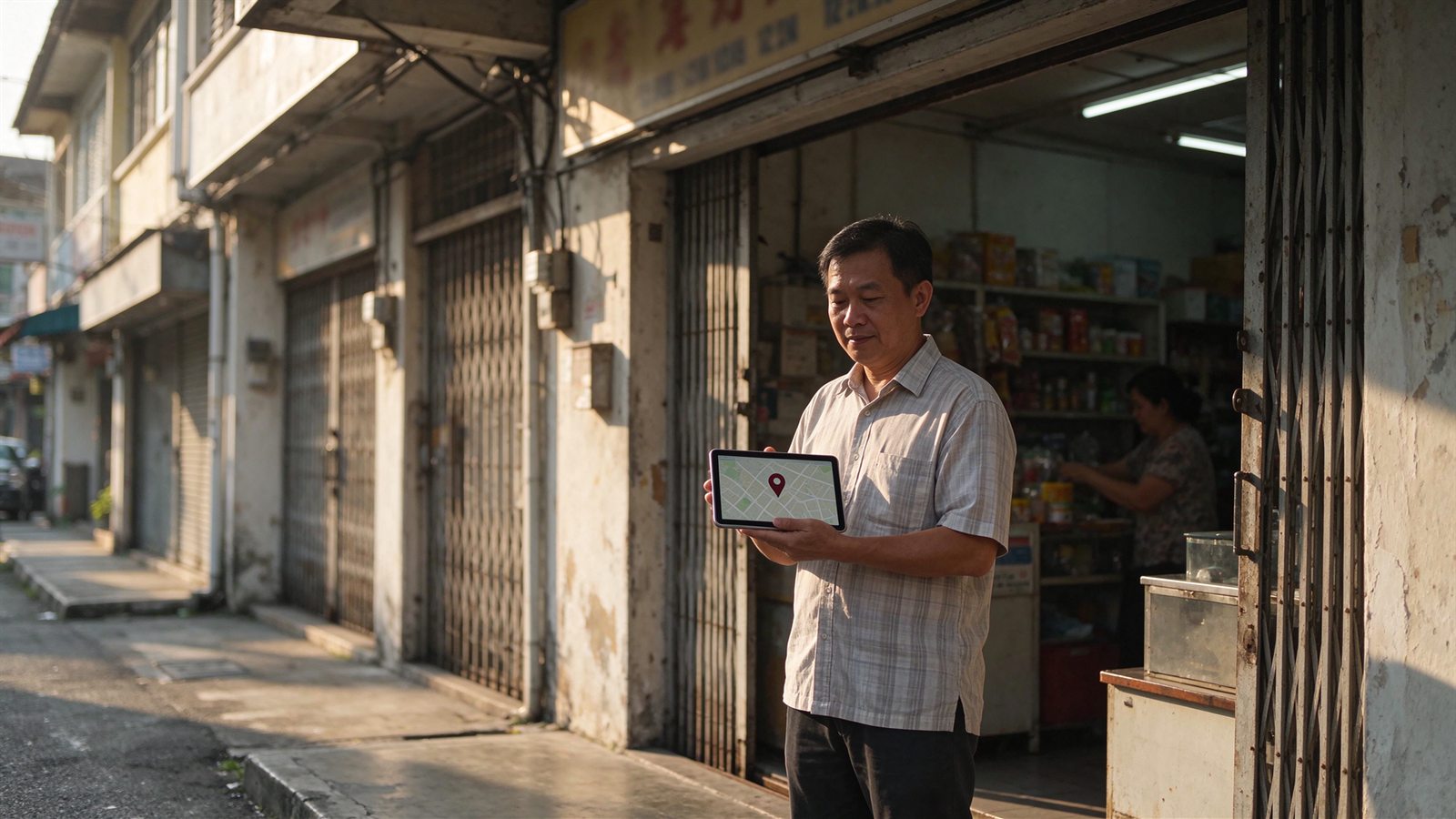
- Map pin. Walk to your door with the Maps app open and confirm the pin lands on the right unit. In dense shophouse rows the pin is frequently one door off, which sends people to the wrong shop.
- Hours. Include lunch closures, Sunday closures and public holiday behaviour. Malaysian holiday calendars vary by state, so note what applies to you.
- Service area. If you travel to customers, list the areas you genuinely cover: for example Petaling Jaya, Subang Jaya, Shah Alam and KL. Do not claim the whole peninsula.
Phase 2: Google Business Profile
Your profile is the single highest leverage asset in local search. Most businesses set it up once and never open it again.
- Claim and verify. Confirm you are the owner, not a manager on someone else's account that you cannot recover.
- Primary category. This is the strongest relevance signal you control. Choose the closest match to what you sell, not the broadest one.
- Secondary categories. Add the services you actually deliver. Too many categories dilutes relevance.
- Services and products. Write each service with a short description that includes the outcome, not just the noun. "Emergency dental extraction, same day slots, PJ" beats "Dentistry".
- Photos. Exterior with signage, interior, team at work, and one clear product or treatment shot. Refresh quarterly. Street view style photos help people recognise the shopfront.
- Posts. One update a week is enough. Offers, new stock, new doctor, seasonal hours. Posts expire, so a stale profile looks abandoned.
- Questions and answers. Seed the questions customers actually ask on WhatsApp, then answer them in your own words.
- Booking and messaging. If you cannot answer messages within a few hours, switch messaging off. A slow reply is worse than no channel.
Phase 3: local pages
A profile gets you into the map. Pages decide what you can rank for in the main results, and what an AI answer can quote about you.
- One page per service. Implants, braces and emergency dentistry are three different questions. A single "Services" page answers none of them well.
- Local substance, not city name swaps. A page for a location should carry something only that location can say: which team works there, parking, accessibility, nearby landmarks, local proof. Duplicated pages with the city changed are doorway pages under Google's spam policies.
- Contact block that works on mobile. Tap to call, WhatsApp link, directions link, and the address in text. Many Malaysian visitors will message before they call.
- Schema. Add LocalBusiness markup with name, address, telephone, opening hours, area served and sameAs links. Skip aggregate rating markup unless it meets Google's review snippet guidelines, which restrict self serving reviews for LocalBusiness.
- Language versions. If you serve English, Bahasa Malaysia and Chinese audiences, write separate pages properly rather than mixing three languages on one page. Machine translated thin pages do not earn trust or links.
- Answer the practical questions. Walk ins accepted? Insurance or panel clinics? Payment methods? Parking? These reduce bounce and give AI answers something accurate to quote.
Phase 4: reviews
Reviews are the closest thing local search has to a trust score, and the easiest place to damage yourself.
- Ask every customer, at the right moment. After a successful service, in person or by WhatsApp with a direct link. Asking is allowed. Paying is not.
- Never incentivise. Google prohibits offering discounts, gifts or entries in exchange for reviews. It is also obvious when twelve five star reviews arrive in one week from accounts with no history.
- Reply to everything, including the three star ones. A calm, specific reply does more for a reader than a wall of perfect ratings.
- Report fakes. Use the profile's report option. Do not argue in public with a competitor leaving reviews.
- Use review language on your pages. Quote real sentences with a first name and the service, and link to the profile. That is what a person reads before deciding.
Phase 5: citations and local links
Citations are mentions of your name, address and phone on other sites. They are not glamorous, but they confirm the entity.
- Core listings first. Google Business Profile, Facebook page, Instagram, Bing Places, Apple Maps, Waze, and any marketplace you actually sell on.
- Industry directories that matter to your customer. A dental clinic benefits from health directories. A restaurant benefits from review and dining platforms. Skip the packages that add you to 200 link farms.
- Local links. Chambers of commerce, resident associations, sponsorships of a local football team or school event, supplier pages, and a mention in the local newspaper. Ten real ones beat a hundred bought ones.
- Audit quarterly. Old addresses on directories are common after a move and they quietly split your signals.
Phase 6: measurement
If you cannot tell whether local search produced a customer, you cannot manage it. Pick a small set of numbers and read them monthly.
- Profile performance. Calls, direction requests, website clicks, and the split between searches that found you by name versus by category. Rising category searches mean discovery is improving.
- Search Console. Queries with city and neighbourhood modifiers, plus which pages earn them. Filter by country to keep Malaysian data clean.
- Analytics events. Call clicks, WhatsApp clicks, form submissions and direction clicks, each as its own event. A combined "conversion" number hides which channel is broken.
- Lead quality field. Add one field in your CRM or spreadsheet: source, and whether the enquiry became a quote or a job. This is the only number that proves the work paid.
- Rank checks with caution. "Near me" results depend on where the person stands. A single rank report from an office in KL tells you very little about a customer in Cheras.
A 30, 60, 90 day plan
- Days 1 to 30. Fix the foundation, verify the profile, correct categories and services, upload real photos, and install call and WhatsApp tracking events.
- Days 31 to 60. Build or rewrite the three service pages that produce most revenue, add LocalBusiness schema, start a review request routine, and fix the top five citations.
- Days 61 to 90. Publish one genuinely local page, collect five to ten reviews, secure two or three real local links, and review the first month of profile data to decide what to double down on.
What to avoid
- Keywords in the profile name. Against Google's guidelines, and a common cause of suspension.
- Virtual offices and fake addresses. Proximity is a ranking factor, but a pin that does not match a real business gets removed.
- Hundreds of city pages. Mass produced location pages are doorway pages. Build where you have substance.
- Bought reviews and review swaps. Both break Google's rules and both are visible to readers.
- Stock photos of a team that is not yours. Patients and customers notice, and the profile loses the trust it was building.