
Your brand, under the answer, at the moment of decision
Classic ads appear beside search results. ChatGPT Ads appears inside a conversation, labelled Sponsored, when the topic matches your offer. Same goal as Google Ads (enquiries), but a different place.
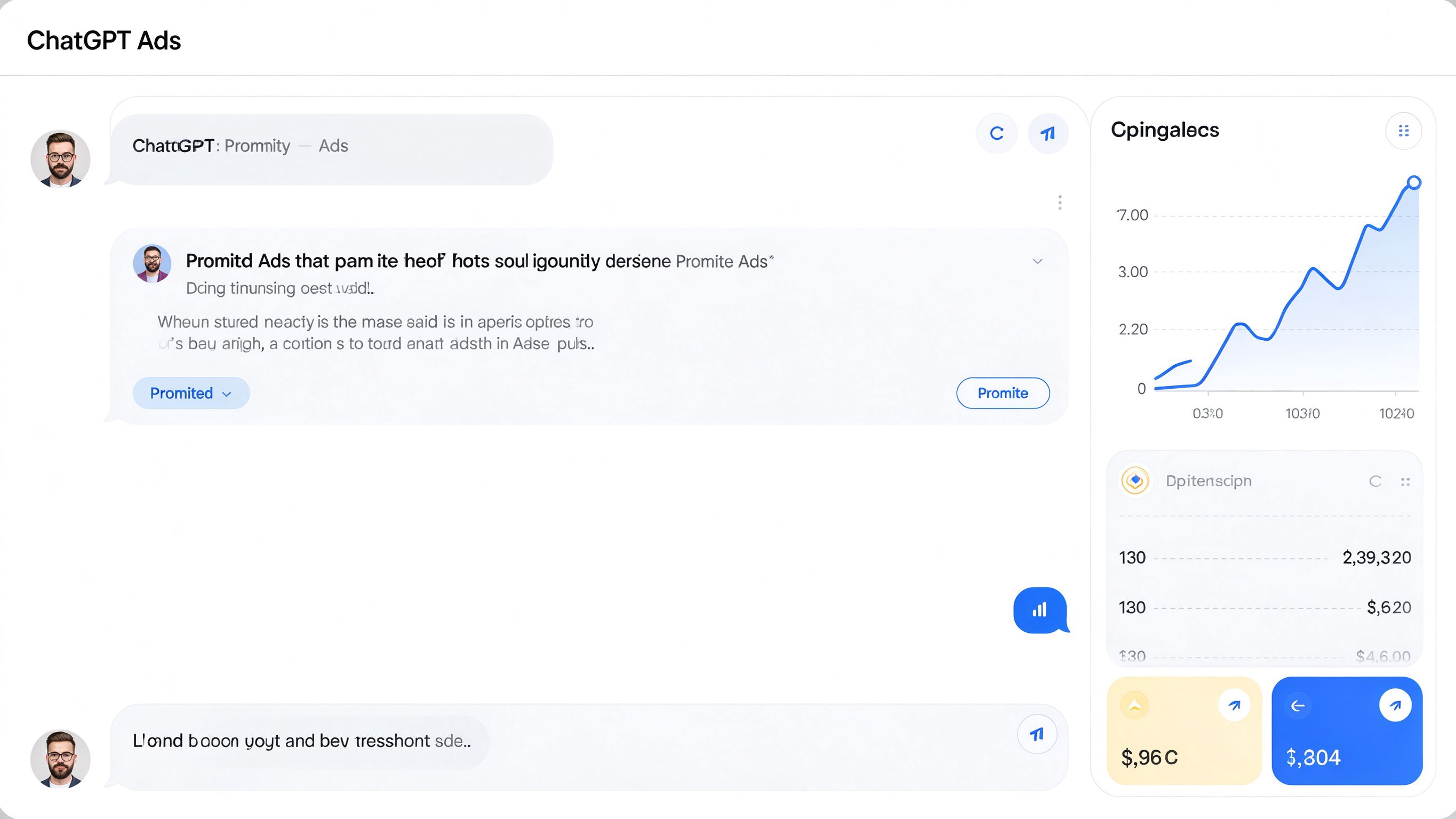
Search behaviour is shifting. Instead of only scrolling Google results, people now ask ChatGPT a question and read one assembled answer. For a business that wants to be seen, that creates a new kind of ad placement: a clearly labelled sponsored unit that appears inside the conversation, just below the reply.
What the ads look like
A ChatGPT Ads unit carries a "Sponsored" label so it is never confused with the answer itself. It shows your brand name and favicon, a short title, a line of copy, a landing page and an image. When someone asks a question your offer answers, the unit can appear under the reply and invite a click.
Who sees ChatGPT Ads
Not every ChatGPT user sees ads. Per OpenAI, ads are shown to eligible free (non-paid) users, and they are not shown to Plus, Pro or Business plan accounts or to under-18 accounts. For a Malaysian business this means your reach sits with free-plan users who are actively asking the kinds of questions you can answer.
How matching works
ChatGPT Ads are not matched like a classic keyword campaign. Instead of bidding on exact keywords, OpenAI combines the conversation topic, your ad creative, your landing page and the context hints you provide to decide whether your unit is relevant to the person's question. Dozzo calls this "conversational intent" rather than keyword lists: we map the questions people actually ask, then write context hints that stay honest and policy safe.
There is a practical consequence here. A clear, specific offer is far easier to match than a vague one. If your page answers "who can help me with X?" in plain terms, you give the system a much better reason to surface your unit.
Cost and buying models
OpenAI offers three main buying models where eligible: Views (CPM) so you pay for impressions, Clicks (CPC) so you pay when someone clicks, and Conversions where conversion tracking is available. Because this is a young ad product, how much you spend and what you measure will be scoped to what OpenAI supports for your entity on the day you launch. Start with a small daily budget to test and learn, then scale what brings enquiries.
ChatGPT Ads vs Google Ads
For most Malaysian businesses, the honest framing is that ChatGPT Ads is an add-on, not a replacement for Google Ads. Here is the plain-language comparison:
| Compare | ChatGPT Ads | Google Ads |
|---|---|---|
| Where does the ad show? | Under a ChatGPT reply, labelled Sponsored | Google Search, YouTube, Display, Maps and more |
| How does matching work? | Chat topic plus your context hints, not exact keywords | Keywords, audiences and Performance Max |
| Who usually sees it? | Eligible free ChatGPT users | Anyone searching or browsing in your targeting |
| Best when | People ask "who can help?" and your offer answers clearly | You need steady Search and YouTube demand with proven tracking |
The two work well together. Google Ads handles steady, proven search demand. ChatGPT Ads lets you appear in the answers people increasingly consult before they choose.
When it fits (and when it does not)
ChatGPT Ads tends to fit three kinds of businesses:
- Service businesses. Clinics, home services, education and B2B firms that answer "who can help?" questions.
- Clear e-commerce offers. Products that fit a short title and a fast, mobile-friendly page.
- Teams that already measure. You track forms, calls or WhatsApp enquiries, so you can tell what actually converts.
It is probably not ready for you if you have no live site, a restricted or policy-sensitive offer, or no budget to test and learn. Start on the foundations first, then add ChatGPT Ads when the offer is clear and the tracking is in place.
How Dozzo runs it
Dozzo runs ChatGPT Ads management with the same paid-media discipline we apply to Google Ads, built for a chat product. The flow is Readiness, Account, Launch and Learn:
- Readiness. Check access, margins and whether your site can convert chat traffic.
- Account. You verify and keep ownership of the OpenAI advertiser account. Dozzo is invited in and structures campaigns and tracking.
- Launch. We build the creatives and context hints, review them, then start with a controlled daily budget.
- Learn. We read Ads Manager and GA4, keep what brings enquiries and pause the rest.